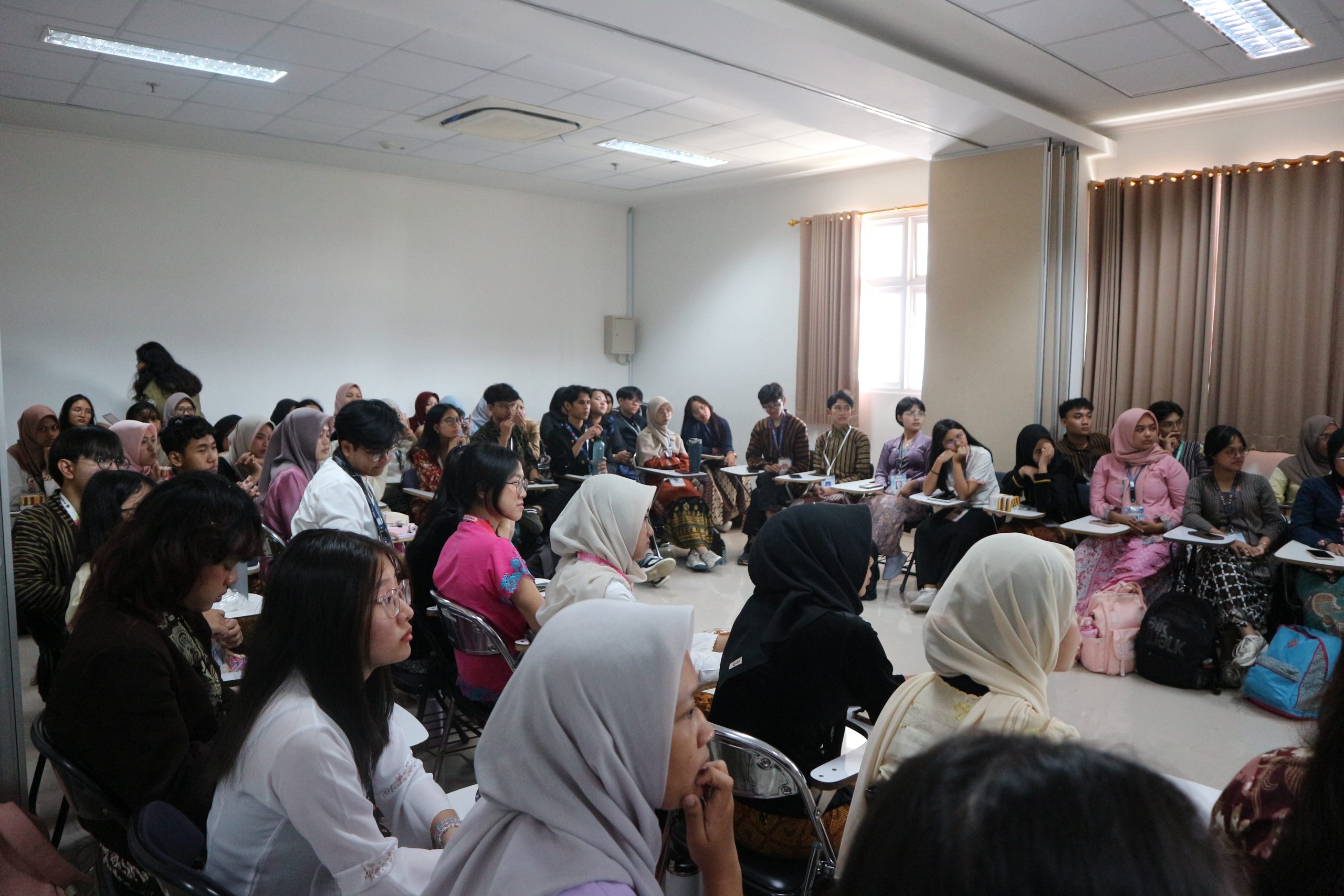
Yogyakarta, August 6, 2026 — As part of the PIONIR Kampung Budaya program, new students of the Korean Language and Culture Study Program, Faculty of Cultural Sciences, Universitas Gadjah Mada, participated in a study program orientation session on August 6, 2026. The session provided an opportunity for new students to become more familiar with the academic environment that will be part of their educational journey in the Korean Language and Culture Study Program.

During the session, students were introduced to the study program’s profile, various academic and non-academic activities within the study program, as well as the faculty members who will support them throughout their studies. Students were also introduced to the new curriculum, which will be implemented for the 2026 cohort.
The curriculum revision is part of the study program’s ongoing evaluation and development, taking into consideration various inputs, including feedback from students and alumni. Through this revision, the Korean Language and Culture Study Program seeks to provide more diverse learning opportunities while giving students greater flexibility to develop competencies according to their interests and areas of specialization.
One of the major changes in the 2026 curriculum is the addition of courses and the introduction of three areas of specialization: Linguistics, Literature, and Culture. Students have the opportunity to select two areas of specialization according to the curriculum track they pursue. This structure allows students to develop a more focused academic interest while broadening their understanding of Korean Studies from different perspectives.

In addition to changes in the course structure, the 2026 curriculum also implements the Transdisciplinary Development Curriculum Type 3 and Type 7, in accordance with Article 13D of UGM Rector’s Regulation Number 19 of 2025. Unlike the previous curriculum, which only implemented Type 7, the new curriculum provides alternative pathways for specialization, allowing students greater flexibility in determining their academic direction.
Under the Transdisciplinary Development Curriculum Type 7, students may pursue one area of specialization, with the following structure:
- University curriculum courses: 23 credits;
- Faculty curriculum courses: 4 credits;
- Core study program curriculum courses: 90 credits;
- Study program specialization courses: 15 credits; and
- Elective courses: 15 credits.
Meanwhile, the Transdisciplinary Development Curriculum Type 3 allows students to pursue two areas of specialization. This curriculum consists of:
- University curriculum courses: 23 credits;
- Faculty curriculum courses: 4 credits;
- Core study program curriculum courses: 90 credits; and
- Two groups of study program specialization courses, each consisting of 15 credits.
The introduction of the new curriculum during the study program orientation is expected to help new students understand the academic options available to them from the beginning of their studies. With a more diverse and flexible learning structure, students will not only gain a strong foundation in the Korean language and culture but will also have opportunities to develop expertise according to their individual interests.
Through the 2026 curriculum, the Korean Language and Culture Study Program continues to develop an adaptive learning environment that responds to students’ needs and developments in the field, while strengthening connections with academic partners at the international level. This curriculum enhancement is expected to provide a strong foundation for students to develop academic competencies, intercultural perspectives, and readiness to pursue diverse opportunities at both national and global levels.
(Aura Adiba W.L/Eunike Serafia N.S)