Yogyakarta, September 2026 — Sri Wahyuningsih, S.S., M.A., a lecturer from the Korean Language and Culture Study Program at the Faculty of Cultural Sciences, Universitas Gadjah Mada (UGM), presented her research on the development of a Korean–Indonesian bilingual dictionary for EPS-TOPIK learners at the ASIALEX 2026 international conference. The event was held from September 9–11, 2026, at The Jogja Hotel and Convention in Yogyakarta.
Organized by the Agency for Language Development and Cultivation in collaboration with the Asian Association for Lexicography (ASIALEX), the conference brought together lexicography researchers, academics, and practitioners from around the globe.
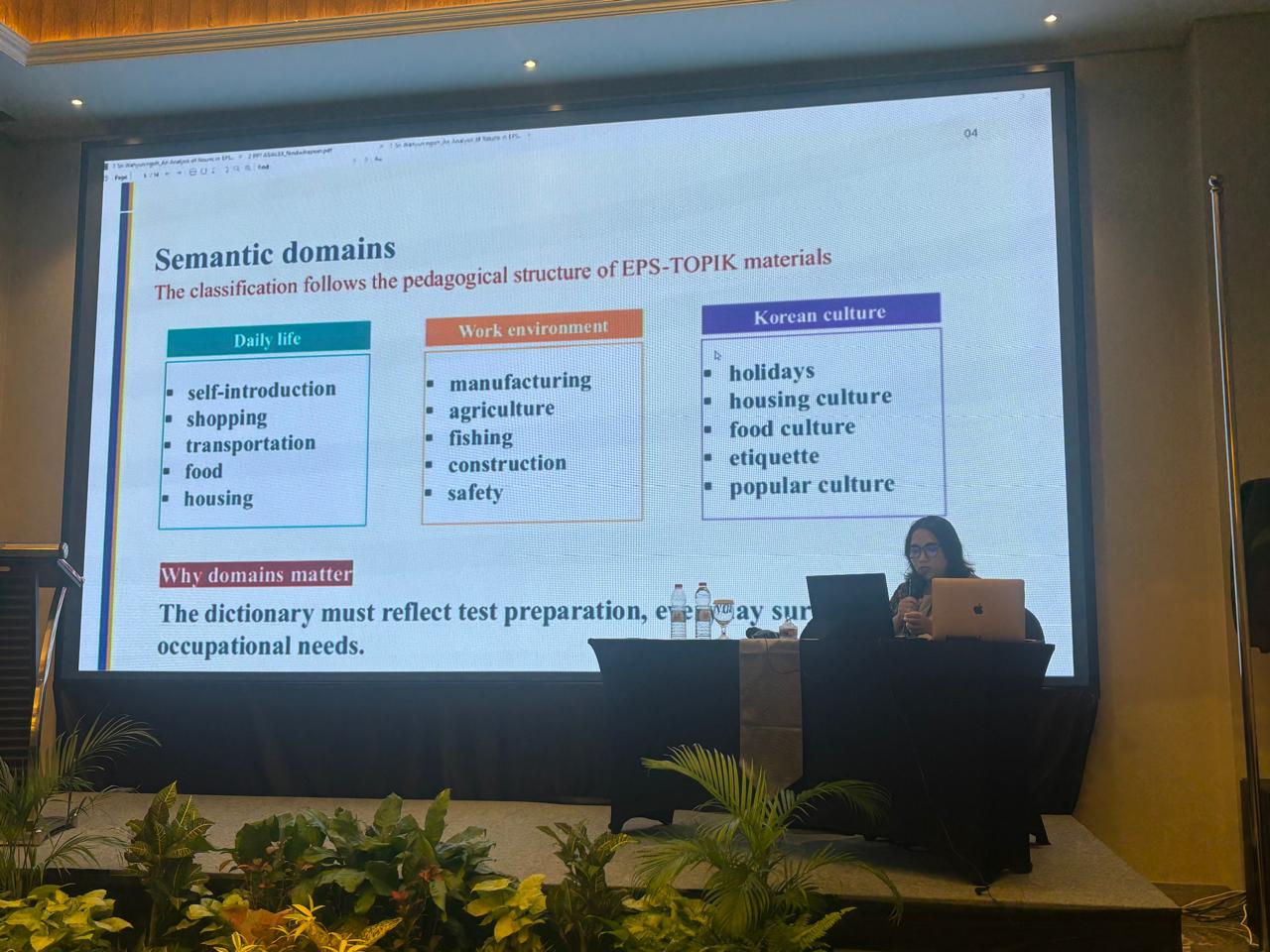
During the event on September 11, Sri Wahyuningsih presented a paper titled “An Analysis of Nouns in EPS-TOPIK Textbooks: Toward the Development of a Korean–Indonesian Bilingual EPS-TOPIK Dictionary.” Conducted in collaboration with Prof. Kilim Nam of Yonsei University, the study focuses on analyzing nouns in EPS-TOPIK textbooks to serve as a foundation for a Korean–Indonesian bilingual dictionary tailored specifically for prospective Indonesian migrant workers (CPMI) heading to South Korea. Based on the analysis, a total of 3,122 noun types were identified following the data extraction and filtering process.
The findings indicate that the vocabulary in EPS-TOPIK textbooks extends beyond the workplace environment, encompassing everyday life and cultural terminology as well. This suggests that prospective migrant workers require a broad range of vocabulary competence to effectively communicate and adapt while living and working in South Korea.
By analyzing 60 units from the New Standard Korean Textbook for EPS-TOPIK Vol. 1 and Vol. 2 published by HRD Korea, this study marks the initial phase in developing the Korean–Indonesian EPS-TOPIK bilingual dictionary. Beyond providing Indonesian equivalents, the planned dictionary will feature contextual usage examples, collocations, domain labels, vocabulary relevance information, and visual aids for specific lemmas. The development of this dictionary is expected to not only help learners grasp the meaning of words but also understand how this vocabulary is practically applied in everyday life and workplace contexts in South Korea.
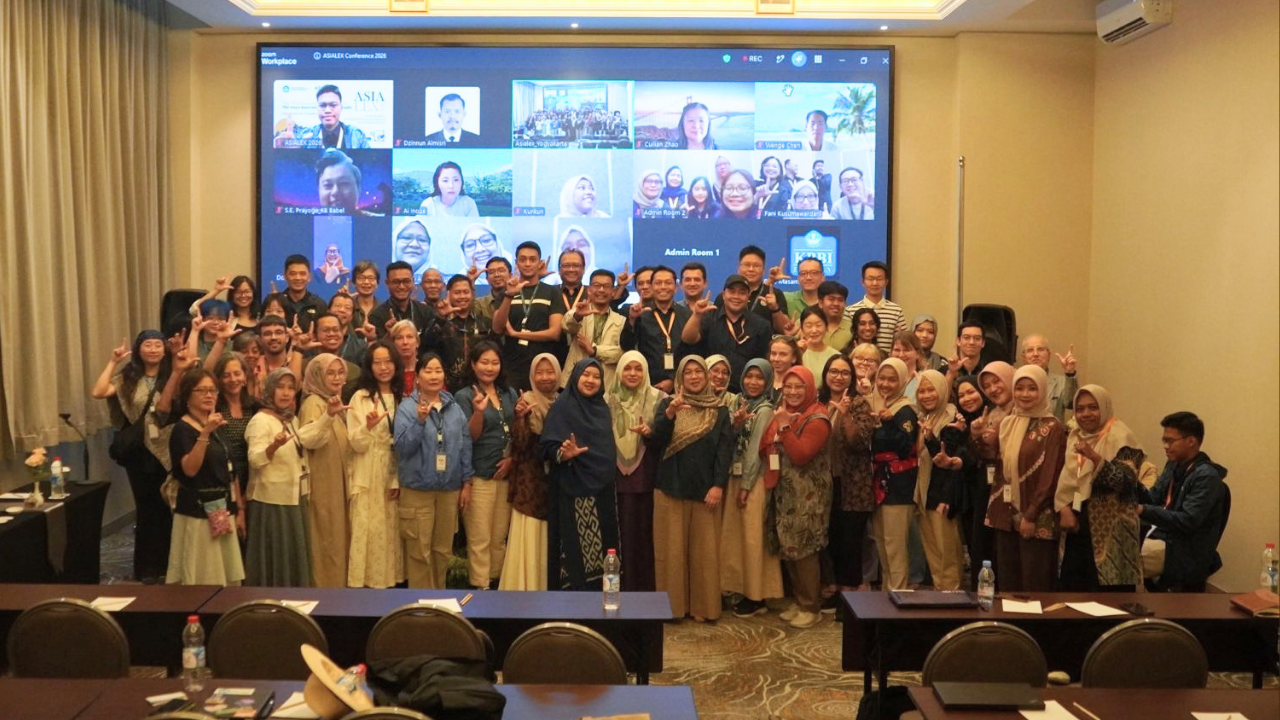
Participation in ASIALEX 2026 is anticipated to open avenues for further discussion and collaboration in lexicography, teaching Korean for specific purposes, and the development of learning resources that better meet the needs of prospective Indonesian migrant workers.
(Sri Wahyuningsih, Alma Naya)